From the ACE database. Researched and checked against published sources.
Abimael Guzmán
1934 to 2021, led the Shining Path from its split in the late 1960s, waged war from 1980, captured in Lima in 1992
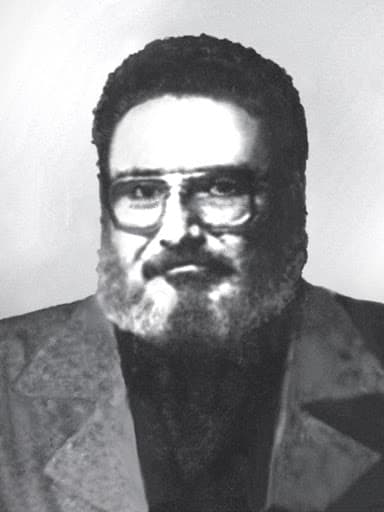
altemark, Public domain, via Wikimedia Commons
85/100
ACE Score: 85/100
High on the scale. An index, not a percentage.
95High
How total and coercive the leader’s power was.
80High
How devoted to and dependent on the leader followers became.
80High
How hard it was to leave.
:Systems like this tend to be brought down from outside once their violence meets a stronger force.
Scores are an interpretation of published sources using the ACE scoring guide, not findings of fact. Inclusion does not classify anyone as a cult. Disclaimer
Abimael Guzmán was a philosophy lecturer in Ayacucho who built a small Maoist party into one of the most violent insurgencies in Latin American history. From 1980 the Shining Path waged a 'people's war' against the Peruvian state and against peasants, unions and leftists who would not submit. Members called him 'Presidente Gonzalo' and hailed him as the 'fourth sword' of Marxism after Marx, Lenin and Mao. Peru's Truth and Reconciliation Commission estimated 69,280 deaths in the conflict and named the Shining Path the main perpetrator: it caused 54 percent of the deaths reported to the Commission and about 46 percent (some 31,000) in its statistical estimate. Guzmán was captured in 1992, sentenced to life and died in prison in 2021.
In academic terms, guzmán combined near-total epistemic closure around 'Gonzalo Thought' with an explicit doctrine that militants owed a 'quota of blood', producing very high debt and an outward vector of mass killing. Low routinization showed when his capture and later peace letters split the party.
Where scholars disagree
The case that the framework fits
Gorriti and the Truth Commission describe a personality cult, ritual submission to Guzmán and a party that killed its own wavering members, which matches the core features of a high-control group.
The case that it does not fit, or overstates
Scholars in Stern's volume stress that the Shining Path recruited on real grievances in a poor, neglected region and that its spread depended on local politics and state abuses, not only on Guzmán's personal hold. On this view a cult frame can hide the social roots of the war and the state's own large share of killings.
The five walls
8.6 of 10
- 9
1.
Who decides what is real?
Party documents made 'Gonzalo Thought' the guiding doctrine and Guzmán its infallible interpreter. Cadres who questioned the line faced struggle sessions and, in the war zones, execution.
- 8
2.
Are friends and family outside the group cut off?
Militants were told to place the party above family, and children were taken into 'pioneer' units. In the Ene and Tambo valleys the Truth Commission documented Asháninka families held in forced labour camps and separated.
- 8
3.
How hard is it to physically leave?
In zones it controlled, the Shining Path ran 'people's committees' and camps where attempted flight could be punished by death. Urban militants could drift away more easily, which keeps this below the maximum.
- 8
4.
Is an apocalypse or a destined triumph always near?
Guzmán framed the war as the final stage of a world revolution that would bring 'strategic equilibrium' and then victory. Militants were told that the revolution would cost a 'river of blood' and that each must be ready to give their life.
- 10
5.
Does the group decide who deserves to live?
The Truth Commission's statistical estimate attributed about 31,000 of 69,280 deaths (46 percent) to the Shining Path, and 54 percent of the deaths reported to it. In the April 1983 Lucanamarca massacre militants killed 69 villagers, 18 of them children, and Guzmán told the Commission in 2002 that he was 'the first one responsible'.
Debt, dependence and harm
9 of 10, high
How much do followers feel they owe?
Members pledged to pay a personal 'quota of blood' and signed letters of submission to Guzmán. Participation in killings bound recruits to the party and closed off return to village life.
7 of 10, high
How far does everything rest on one person?
The party had a Central Committee and regional committees, but all strategy flowed from Guzmán. After his 1992 capture and his 1993 call for a peace accord, the organisation split and shrank to remnant columns.
+9, mostly outsiders
When the system turns violent, where does the harm go?
The great majority of Shining Path victims were Peruvian peasants, community leaders and rival leftists, not members. Assassinations included the Lima community organiser María Elena Moyano in 1992.
Methods of control
Specific techniques from the historical record that kept followers loyal and the bubble sealed.
- 01Doctrine of 'Gonzalo Thought', with Guzmán hailed as the fourth sword of Marxism
- 02Written letters of submission to the leader
- 03The 'quota of blood' as a duty to kill and to die
- 04Execution of informers, deserters and village authorities
- 05Forced recruitment of children and Asháninka families
- 06Cellular secrecy that kept rank and file dependent on superiors
Against the reference cases
State power, violence aimed outward
Compared with Hitler
Like Hitler, Guzmán turned an ideology into a personal doctrine and directed killing at outsiders on a large scale, but he never held a state and his organisation fell apart once he was captured.
A sealed group, violence aimed inward
Compared with Jones
Both leaders demanded willingness to die, but Jones turned death inward on his members while Guzmán sent violence outward against Peruvian villagers.
Through the theorists
A clear case of charismatic authority dressed in party forms: the Central Committee existed, but legitimacy rested on Guzmán's person and collapsed with his arrest.
'Gonzalo Thought' worked as a sacred science and loaded language, with confession and struggle sessions enforcing purity of belief.
Gorriti
Gorriti frames the war as millenarian: a small, disciplined sect convinced that history guaranteed its victory and that mass death was the price.
Key sources
Strong evidence base
- Gorriti, Gustavo (1999). The Shining Path: A History of the Millenarian War in Peru.
- Stern, Steve J. (ed.) (1998). Shining and Other Paths: War and Society in Peru, 1980-1995.
- Comisión de la Verdad y Reconciliación (Peru) (2003). Informe Final.
Caveats
The Truth Commission's estimate attributed about 30 percent of deaths (some 20,500) to state forces and about 24 percent to other actors such as self-defence committees, so the conflict's overall violence is not attributable to Guzmán alone. The totals rely on statistical projection, and the Shining Path's share differs between reported cases (54 percent) and the estimate (46 percent). Control was tighter in rural zones than among urban cadres.
Cite this profile
Koziol, T. (2026). Abimael Guzmán. In ACE: Authority, Cult & Exit (Version 1.1, pilot database). Ceraluna Labs. https://cultornot.com/leader/abimael-guzman