From the ACE database. Researched and checked against published sources.
Hong Xiuquan
1814 to 1864, God Worshipping Society and Taiping Heavenly Kingdom, capital at Nanjing from 1853
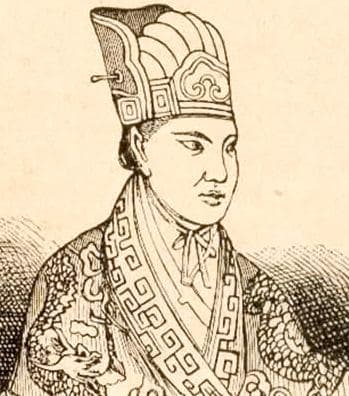
Ford & West Lith., Public domain, via Wikimedia Commons
76/100
ACE Score: 76/100
High on the scale. An index, not a percentage.
85High
How total and coercive the leader’s power was.
63Medium
How devoted to and dependent on the leader followers became.
80High
How hard it was to leave.
(rule-based):Pattern: a closed system with little institutional restraint, where harm was aimed mainly at outsiders. A label for these scores, not a forecast. The summary and caveats describe what actually happened.
Scores are an interpretation of published sources using the ACE scoring guide, not findings of fact. Inclusion does not classify anyone as a cult. Disclaimer
Hong Xiuquan was a village teacher from Guangdong who failed the imperial exams and, after reading a Christian tract, came to believe that he was the younger brother of Jesus sent to destroy demons. His God Worshipping Society rose against the Qing dynasty in 1851 and captured Nanjing in 1853, making it the capital of the Taiping Heavenly Kingdom. The Taiping separated men and women, held goods in common and enforced a strict moral code. The civil war that followed, fought with great brutality on both sides, killed an estimated 20 to 30 million people before Qing forces took Nanjing in 1864, shortly after Hong's death.
In academic terms, the Taiping state achieved high closure on nearly every dimension and directed large-scale violence outward in a war of conquest. Its millenarian logic was routinised into a state, yet that state stayed dependent on Hong's revelations.
Where scholars disagree
The case that the framework fits
Hong claimed divine kinship, ruled through revelation, separated families, controlled movement and labelled enemies as demons to be destroyed.
The case that it does not fit, or overstates
Spence and Platt place the Taiping in a context of Qing crisis, ethnic tension and foreign intervention. Many historians, and the People's Republic, treat it as a peasant revolution with social reform aims, such as land redistribution and bans on foot-binding.
The five walls
8 of 10
- 8
1.
Who decides what is real?
Hong's visions and his edited Bible were the only accepted truth, and Confucian and Buddhist texts and temples were destroyed. Breaking the Heavenly Commandments was punished, often by death.
- 8
2.
Are friends and family outside the group cut off?
In the early Nanjing years men and women, including married couples, lived in separate quarters, and sexual contact was a capital offence, while Hong and the other kings kept large harems. Family life was reorganised around military units.
- 8
3.
How hard is it to physically leave?
Residents of Taiping cities lived in supervised camps and could not leave without permission. Desertion was punished by execution.
- 7
4.
Is an apocalypse or a destined triumph always near?
Hong framed the war as a final struggle to destroy demons and establish the Heavenly Kingdom on earth. All life was organised for this struggle.
- 9
5.
Does the group decide who deserves to live?
Manchus and Qing officials were called demons, and Taiping forces massacred Manchu residents in Nanjing in 1853. In the Tianjing Incident of 1856 the leader Yang Xiuqing and thousands of his followers were killed in an internal purge.
Debt, dependence and harm
7 of 10, high
How much do followers feel they owe?
Converts surrendered property to a sacred treasury and lived on rations. Service as soldiers or labourers was compulsory, and complicity in war was required.
5 of 10, medium
How far does everything rest on one person?
The kingdom had kings, ministers, a civil examination system and a land system that existed mostly on paper. Real power swung between Hong and his kings, and the state collapsed when Nanjing fell.
+7, mostly outsiders
When the system turns violent, where does the harm go?
The Taiping fought a war of conquest across southern and central China and massacred Manchu residents and other civilians. The war's estimated 20 to 30 million deaths also include vast numbers killed by Qing forces, famine and disease, so not all of it can be laid on the Taiping.
Methods of control
Specific techniques from the historical record that kept followers loyal and the bubble sealed.
- 01Revelation-based authority as God's son
- 02Separation of the sexes and families
- 03Sacred treasury and communal property
- 04Death penalties for breaking the Heavenly Commandments
- 05Demonisation of the Qing and Manchus
- 06Military organisation of all residents
Against the reference cases
State power, violence aimed outward
Compared with Hitler
Like Hitler, Hong led a state at war that dehumanised enemies and committed mass killing, though the Taiping war was also a civil war in which Qing forces killed on a vast scale.
A sealed group, violence aimed inward
Compared with Jones
Both claimed special divine status and controlled family life, but Hong ruled millions as a state rather than a single settlement.
Through the theorists
Hong's charisma was partly routinised into kingly offices and exams, but rival 'voices of God' such as Yang Xiuqing show charisma contested inside the state.
Spence
Spence reads the movement through Hong's personal religious world, built from a Protestant tract and his own visions.
The Heavenly Commandments and constant indoctrination match 'milieu control' and a demand for purity.
Key sources
Strong evidence base
- Spence, Jonathan D. (1996). God's Chinese Son: The Taiping Heavenly Kingdom of Hong Xiuquan.
- Platt, Stephen R. (2012). Autumn in the Heavenly Kingdom: China, the West, and the Epic Story of the Taiping Civil War.
Caveats
Category is 'religious' although the Taiping founded a state and army. Scores reflect 1853 to 1856, when control was strongest; later rules on sex separation were relaxed. Death toll estimates vary widely and include deaths caused by Qing forces, famine and disease.
Cite this profile
Koziol, T. (2026). Hong Xiuquan. In ACE: Authority, Cult & Exit (Version 1.1, pilot database). Ceraluna Labs. https://cultornot.com/leader/hong-xiuquan