From the ACE database. Researched and checked against published sources.
Maharishi Mahesh Yogi
about 1918 to 2008, Transcendental Meditation movement, active worldwide from India, the United States and later Vlodrop in the Netherlands
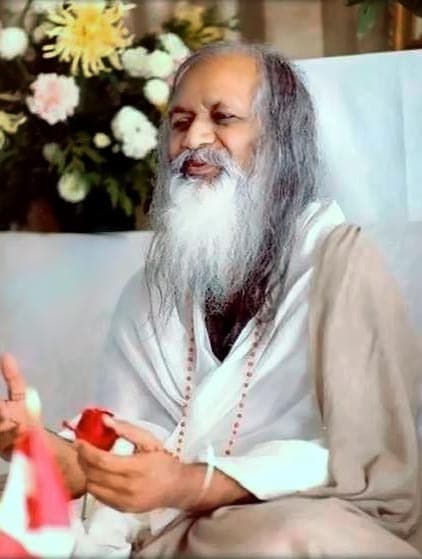
Vernon Barnes PhD Dr Jean Fortunet, CC BY-SA 3.0, via Wikimedia Commons
21/100
ACE Score: 21/100
Low on the scale. An index, not a percentage.
20Low
How total and coercive the leader’s power was.
33Low
How devoted to and dependent on the leader followers became.
10Low
How hard it was to leave.
(rule-based):Pattern: walls low enough (Bubble Score under 5) for followers to leave fairly easily. A label for these scores, not a forecast. The summary and caveats describe what actually happened.
Scores are an interpretation of published sources using the ACE scoring guide, not findings of fact. Inclusion does not classify anyone as a cult. Disclaimer
Maharishi Mahesh Yogi taught Transcendental Meditation (TM), a mantra technique he marketed as scientific rather than religious. The movement grew rapidly after the Beatles visited his Rishikesh ashram in 1968. Most practitioners paid a fee, learned the technique and meditated at home with no further obligation. A smaller inner circle took advanced courses such as the TM-Sidhi programme with 'yogic flying', and the movement founded Maharishi International University, based in Fairfield, Iowa from 1974, and in 1992 the Natural Law Party.
In academic terms, tM is a low-control case: closures are weak for the mass of practitioners, with moderate epistemic closure and devotion debt concentrated in a small inner core. Leader dependence was moderated by a large organisation with a named successor structure.
Where scholars disagree
The case that the framework fits
Critics and some former teachers describe pressure to move up through ever more expensive courses, a sealed vocabulary of 'scientific' claims, and deference to Maharishi as an infallible master within the inner core. A US federal court in Malnak v. Yogi (1977) held that TM as taught in New Jersey schools was religious, undercutting its secular branding.
The case that it does not fit, or overstates
For the large majority, TM was a fee-for-service technique with no communal living, no family separation and no continuing obligation. Humes and Goldberg treat it as a major channel of Indian spirituality into Western culture rather than as a high-control group.
The five walls
1.8 of 10
- 3
1.
Who decides what is real?
Maharishi's teachings and the movement's own research claims were privileged, and teachers were trained to present TM in a fixed way. Practitioners had free access to outside information and many combined TM with other beliefs.
- 1
2.
Are friends and family outside the group cut off?
Ordinary practitioners kept their families, jobs and friendships. Only some full-time staff and residents of movement centres reorganised their lives around the group.
- 1
3.
How hard is it to physically leave?
Most people learned TM in a few sessions and practised at home. Residential courses and the Fairfield, Iowa community were voluntary and easy to leave.
- 3
4.
Is an apocalypse or a destined triumph always near?
Maharishi proclaimed a coming 'Age of Enlightenment' and claimed that group meditation could reduce crime and conflict, the so-called Maharishi Effect. This was a long-horizon utopian goal rather than an imminent catastrophe.
- 1
5.
Does the group decide who deserves to live?
Outsiders were seen as unenlightened rather than as enemies. No harassment campaign or violence against critics is documented in the major scholarly accounts.
Debt, dependence and harm
3 of 10, low
How much do followers feel they owe?
Initiation fees were substantial and advanced courses, Sidhi training and later Ayurvedic and building programmes cost much more. Inner-circle staff gave years of service, but most practitioners paid once.
4 of 10, medium
How far does everything rest on one person?
TM was run through a large network of national organisations, teacher-training bodies and businesses. Before his death Maharishi established the Global Country of World Peace with Tony Nader as its head, which allowed an orderly transition.
0, little harm, or balanced
When the system turns violent, where does the harm go?
No lethal violence is associated with the movement. Criticism focused on overstated scientific claims and fees.
Methods of control
Specific techniques from the historical record that kept followers loyal and the bubble sealed.
- 01Personal mantra given in a private initiation ceremony
- 02Scientific framing of a religious practice
- 03Escalating ladder of paid advanced courses
- 04Utopian promise of world peace through group meditation
- 05Deference to Maharishi's authority in the full-time staff
Against the reference cases
State power, violence aimed outward
Compared with Hitler
TM had no coercive power over the wider population and no enemy group. The comparison mainly shows how far a mass movement with a revered leader can sit from political totalitarianism.
A sealed group, violence aimed inward
Compared with Jones
Unlike Peoples Temple, TM never isolated members physically or demanded their assets. It belongs at the opposite end of the scale.
Through the theorists
Maharishi's charisma was channelled into a bureaucratic, almost corporate structure of courses, licences and national organisations.
Wallis
TM is a clear 'world-affirming' movement that promised success and wellbeing within ordinary life rather than withdrawal from it.
Stark and Bainbridge
TM worked largely as a 'client cult' for most users, with a smaller 'cult movement' core that took on fuller religious commitment.
Key sources
Moderate evidence base
- Forsthoefel, Thomas A., and Cynthia Ann Humes (eds.) (2005). Gurus in America.
- Goldberg, Philip (2010). American Veda: From Emerson and the Beatles to Yoga and Meditation, How Indian Spirituality Changed the West.
Caveats
Experience varied sharply between casual practitioners and full-time staff, so these scores describe the movement as most people met it. Movement-sponsored research inflates benefits, and some ex-member accounts are hostile. Scores follow the rubric's low-control calibration.
Cite this profile
Koziol, T. (2026). Maharishi Mahesh Yogi. In ACE: Authority, Cult & Exit (Version 1.1, pilot database). Ceraluna Labs. https://cultornot.com/leader/maharishi-mahesh-yogi