From the ACE database. Researched and checked against published sources.
Sabbatai Zevi
1626 to 1676, Sabbatean messianic movement, centred on Smyrna, Gaza, Istanbul and Edirne, with followers across Europe and the Middle East
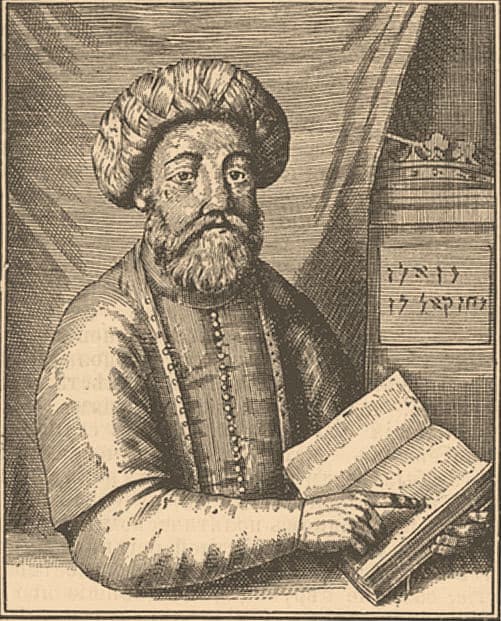
Unknown author, Public domain, via Wikimedia Commons
37/100
ACE Score: 37/100
Low on the scale. An index, not a percentage.
30Low
How total and coercive the leader’s power was.
67Medium
How devoted to and dependent on the leader followers became.
15Low
How hard it was to leave.
(rule-based):Pattern: walls low enough (Bubble Score under 5) for followers to leave fairly easily. A label for these scores, not a forecast. The summary and caveats describe what actually happened.
Scores are an interpretation of published sources using the ACE scoring guide, not findings of fact. Inclusion does not classify anyone as a cult. Disclaimer
Sabbatai Zevi was a rabbi from Smyrna who was proclaimed the Messiah in 1665, largely through the visions and letters of Nathan of Gaza. Within months Jewish communities from Amsterdam to Yemen were fasting, doing penance and preparing to return to the Land of Israel. In 1666 the Ottoman authorities arrested him and he converted to Islam rather than face death. Most followers fell away, but a minority reinterpreted the apostasy as a hidden stage of redemption, and some later formed the Dönme community.
In academic terms, sabbateanism shows near-maximal temporal closure with weak social, spatial and existential closure: the movement bound people through a dated expectation of redemption rather than through physical control. Its survival after the apostasy depended on reinterpretation, not on organisation.
Where scholars disagree
The case that the framework fits
A single figure was treated as the Messiah, his strange acts were explained away as holy, and the belief survived the most direct disconfirmation possible, his conversion to Islam. Festinger-style dissonance reduction is visible in the believers who reinterpreted the apostasy.
The case that it does not fit, or overstates
Scholem and Goldish stress that the movement was driven by communal leaders, prophets and Lurianic Kabbalah more than by Sabbatai himself, who was often passive or ill. There was no closed group to leave, so exit was simply a matter of ceasing to believe.
The five walls
3.4 of 10
- 4
1.
Who decides what is real?
Nathan of Gaza's prophecies and letters set the terms of belief, and rabbis who opposed Sabbatai were denounced, threatened or, as in Smyrna, deposed. There was no means of controlling information across a scattered diaspora.
- 2
2.
Are friends and family outside the group cut off?
Followers stayed within their families and congregations; the movement ran through existing Jewish communal life. Divisions over belief split some communities, but family structures were not reorganised.
- 1
3.
How hard is it to physically leave?
There were no compounds or controls on movement. Some believers sold property to prepare for migration, but nobody was held anywhere.
- 8
4.
Is an apocalypse or a destined triumph always near?
Nathan announced that redemption would unfold within a year or two, and 1666 was widely expected to be the year. Communities practised extreme penance and some people sold homes and businesses in expectation of the return to Zion.
- 2
5.
Does the group decide who deserves to live?
Opponents were called unbelievers and some faced threats or social pressure, notably in Smyrna in late 1665. There is no record of the movement killing critics.
Debt, dependence and harm
4 of 10, medium
How much do followers feel they owe?
Penitential fasting, ritual immersion and self-mortification were widespread in 1665 and 1666, and some families liquidated their assets. The sacrifice was intense but short-lived and largely self-directed.
8 of 10, high
How far does everything rest on one person?
The movement had no offices or treasury; authority rested on Sabbatai and Nathan's prophetic letters. After the apostasy small circles and the Dönme continued, but without a central leadership.
0, little harm, or balanced
When the system turns violent, where does the harm go?
The movement caused little lethal violence to anyone. The main harm was economic loss and disillusionment among believers.
Methods of control
Specific techniques from the historical record that kept followers loyal and the bubble sealed.
- 01Prophetic proclamation by a trusted herald (Nathan of Gaza)
- 02Dated expectation of redemption
- 03Collective penance and fasting
- 04Letters circulated across the diaspora reporting miracles
- 05Excommunication and pressure on opposing rabbis
- 06Reinterpretation of failure as a hidden mystery
Against the reference cases
State power, violence aimed outward
Compared with Hitler
Both drew on a promise of national restoration, but Sabbatai had no state, army or police and caused no organised violence.
A sealed group, violence aimed inward
Compared with Jones
Unlike Jones, Sabbatai never gathered followers in one place or controlled their lives, and when he failed, the cost fell on belief rather than on lives.
Through the theorists
Sabbatai's charisma was largely conferred by Nathan's prophecy and popular expectation, which shows charisma as a social relationship rather than a personal trait.
The believers who stayed loyal after the 1666 conversion fit the pattern of intensified commitment after disconfirmation.
Scholem
Scholem read the movement as the outcome of Lurianic Kabbalah's spread, which gave ordinary Jews a cosmic role in redemption and made a messiah plausible.
Key sources
Moderate evidence base
- Scholem, Gershom (1973). Sabbatai Ṣevi: The Mystical Messiah, 1626–1676.
- Goldish, Matt (2004). The Sabbatean Prophets.
Caveats
Much of the record comes from hostile contemporaries such as Jacob Sasportas and from Christian observers, alongside believers' letters. Scores reflect the peak in 1665 and 1666; after the apostasy the movement became small and secretive. Scholem's view that Lurianic Kabbalah prepared the ground has been challenged by Moshe Idel, and his psychological reading of Sabbatai as manic-depressive is also debated.
Cite this profile
Koziol, T. (2026). Sabbatai Zevi. In ACE: Authority, Cult & Exit (Version 1.1, pilot database). Ceraluna Labs. https://cultornot.com/leader/sabbatai-zevi