From the ACE database. Researched and checked against published sources.
Antônio Conselheiro
1830 to 1897, lay preacher and founder of the Canudos settlement in the backlands of Bahia
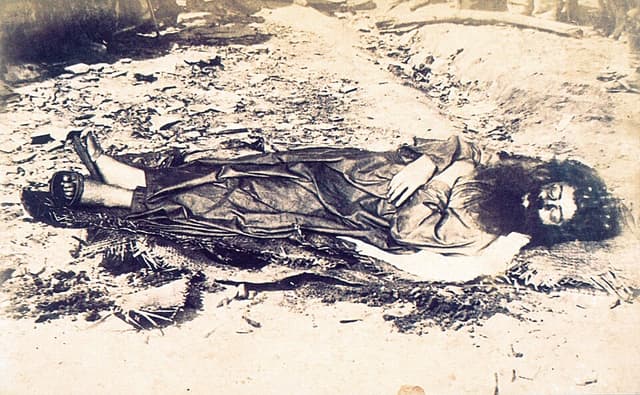
Flávio de Barros, Public domain, via Wikimedia Commons
36/100
ACE Score: 36/100
Low on the scale. An index, not a percentage.
25Low
How total and coercive the leader’s power was.
53Medium
How devoted to and dependent on the leader followers became.
30Low
How hard it was to leave.
(rule-based):Pattern: walls low enough (Bubble Score under 5) for followers to leave fairly easily. A label for these scores, not a forecast. The summary and caveats describe what actually happened.
Scores are an interpretation of published sources using the ACE scoring guide, not findings of fact. Inclusion does not classify anyone as a cult. Disclaimer
Antônio Vicente Mendes Maciel, known as Antônio Conselheiro, was a lay preacher who wandered the northeastern backlands for two decades, repairing churches and preaching penance. In 1893 he settled at Canudos, which grew into a town of perhaps 20,000 to 30,000 poor rural people. He rejected the new Brazilian Republic's civil marriage and taxes, and the authorities treated the settlement as a monarchist threat. Four military expeditions in 1896 and 1897 ended with the town's destruction and the killing of most remaining inhabitants, including prisoners.
In academic terms, canudos shows moderate closure built around religious discipline and economic refuge, not coercion. The overwhelming violence came from the Brazilian state, so the movement's own vector is near zero.
Where scholars disagree
The case that the framework fits
A charismatic preacher drew thousands into a separate settlement, who sold property to join and rejected state authority. Contemporaries called them fanatics.
The case that it does not fit, or overstates
Levine argues that Canudos was an orderly refuge for the rural poor, and that the label of fanaticism came from republican elites and journalists. The community was destroyed by the state, not by its leader.
The five walls
3.2 of 10
- 3
1.
Who decides what is real?
Conselheiro's sermons and advice shaped life in Canudos, and he condemned the Republic as godless. Residents traded with nearby towns, and a Capuchin mission visited in 1895, though it left after its call to disperse was rejected.
- 3
2.
Are friends and family outside the group cut off?
Families came to Canudos together, and the community kept family life and religious marriage. Life centred on devotions and work.
- 3
3.
How hard is it to physically leave?
People moved in freely and many came voluntarily, selling their property to settle. During the war armed defenders controlled the town, and leaving became dangerous.
- 5
4.
Is an apocalypse or a destined triumph always near?
Prophecies attributed to him spoke of the end of the world and the sertão becoming sea. Levine notes that their authorship is uncertain and that daily life focused on penance and work, so expectation of the end was real but not dated.
- 2
5.
Does the group decide who deserves to live?
Outsiders and the Republic were described as ungodly. The community did not persecute dissenters, and armed defence began only when troops attacked.
Debt, dependence and harm
4 of 10, medium
How much do followers feel they owe?
Many settlers sold land and goods to join, and the community expected labour on churches and walls. Residents kept their own houses and traded privately.
7 of 10, high
How far does everything rest on one person?
Lieutenants such as the merchant Antônio Vilanova and the commander João Abade ran trade and defence. Authority rested on Conselheiro, and the town did not survive him.
+1, little harm, or balanced
When the system turns violent, where does the harm go?
Defenders killed many soldiers while repelling attacks in 1896 and 1897. The violence was started and dominated by the army, which destroyed the town and executed prisoners.
Methods of control
Specific techniques from the historical record that kept followers loyal and the bubble sealed.
- 01Penitential preaching and devotional discipline
- 02Relocation to a separate settlement
- 03Rejection of republican institutions
- 04Labour on religious buildings
- 05Armed defence under trusted lieutenants
Against the reference cases
State power, violence aimed outward
Compared with Hitler
No meaningful parallel: Canudos was a victim of state violence, not a source of it.
A sealed group, violence aimed inward
Compared with Jones
Canudos, like Jonestown, was a remote settlement founded by a preacher, but its residents died at the hands of an army, not through the leader's command.
Through the theorists
Conselheiro held charisma rooted in folk Catholic holiness; his authority did not outlast him.
Levine
Levine treats Canudos as a rational response by poor backlanders to economic and political exclusion.
da Cunha
Euclides da Cunha's account, though shaped by racial theories of its time, condemned the army's massacre as a crime.
Key sources
Moderate evidence base
- Levine, Robert M. (1992). Vale of Tears: Revisiting the Canudos Massacre in Northeastern Brazil, 1893–1897.
- da Cunha, Euclides (trans. Samuel Putnam) (1944). Rebellion in the Backlands.
Caveats
Accounts of the community come mainly from hostile military and press reports and from da Cunha, who arrived only for the final campaign. Scores reflect the settlement before and during the war; spatial control rose during the siege.
Cite this profile
Koziol, T. (2026). Antônio Conselheiro. In ACE: Authority, Cult & Exit (Version 1.1, pilot database). Ceraluna Labs. https://cultornot.com/leader/antonio-conselheiro