From the ACE database. Researched and checked against published sources.
Ferenc Szálasi
1897 to 1946, leader of the Arrow Cross movement and installed head of Hungary from October 1944 to 1945
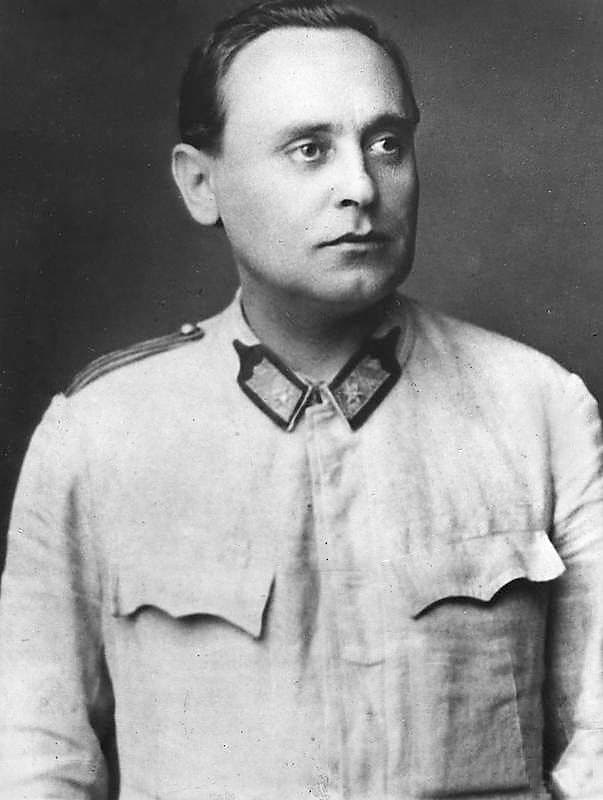
AnonymousUnknown author / Zespół: Wydawnictwo Prasowe Kraków-Warszawa, Public domain, via Wikimedia Commons
67/100
ACE Score: 67/100
Medium on the scale. An index, not a percentage.
85High
How total and coercive the leader’s power was.
60Medium
How devoted to and dependent on the leader followers became.
55Medium
How hard it was to leave.
(rule-based):Pattern: a closed system with little institutional restraint, where harm was aimed mainly at outsiders. A label for these scores, not a forecast. The summary and caveats describe what actually happened.
Scores are an interpretation of published sources using the ACE scoring guide, not findings of fact. Inclusion does not classify anyone as a cult. Disclaimer
Szálasi was a former army staff officer who founded a far-right party in 1935 and preached an ideology he called Hungarism. His Arrow Cross movement won about 15 percent of the vote in 1939 while he was in prison. Most of Hungary's Jews outside Budapest, about 437,000 people, had already been deported to Auschwitz between May and July 1944, before he took power. After Germany forced Regent Horthy from office in October 1944, Szálasi became head of government and later took the title 'Leader of the Nation'. Under his rule Arrow Cross militias shot up to 20,000 Budapest Jews, many on the banks of the Danube, and drove more than 70,000 on forced marches toward Austria. He was tried and executed in 1946.
In academic terms, szálasi's movement had moderate closure in opposition but reached maximum existential score and an outward genocidal vector in its brief time in power, with very low routinization because militias acted on their own.
Where scholars disagree
The case that the framework fits
Nagy-Talavera describes Szálasi as a mystical, self-styled messiah of Hungarism with a devoted following, fitting a charismatic-ideological model.
The case that it does not fit, or overstates
Ungváry and others show that the killings were largely carried out by undisciplined local militias in a collapsing city, and that Szálasi's real authority was weak and dependent on Germany.
The five walls
6.8 of 10
- 7
1.
Who decides what is real?
Once in power the Arrow Cross controlled the press and radio in a besieged capital and killed opponents; Szálasi's writings on Hungarism were treated as the movement's doctrine.
- 4
2.
Are friends and family outside the group cut off?
The party demanded loyalty and organised youth members into militias, but did not systematically break up members' families.
- 7
3.
How hard is it to physically leave?
In November 1944 the regime sealed Budapest's remaining unprotected Jews in a closed ghetto and blocked escape during the siege, though foreign diplomats protected tens of thousands with safe-conduct papers.
- 6
4.
Is an apocalypse or a destined triumph always near?
Szálasi described a coming new order led by Hungary and framed the war as a final struggle, holding to it as the Soviet army surrounded Budapest.
- 10
5.
Does the group decide who deserves to live?
Under Szálasi's rule Arrow Cross militias shot up to 20,000 Jews in Budapest and forced more than 70,000 on marches toward Austria from November 1944, on which thousands died; this was organised mass killing as part of the Holocaust.
Debt, dependence and harm
5 of 10, medium
How much do followers feel they owe?
Members joined militias and took part in killing and looting; complicity bound them to the regime, but the movement was short-lived and asked little from the wider population beyond obedience.
7 of 10, high
How far does everything rest on one person?
Szálasi held state offices, but power was fragmented among local militia leaders who killed without central orders, and the regime depended on the German army.
+10, mostly outsiders
When the system turns violent, where does the harm go?
Violence was directed almost entirely at Jews and political opponents; the regime's own killings and death marches in 1944 and 1945 were part of the Holocaust and anchor the top score.
Methods of control
Specific techniques from the historical record that kept followers loyal and the bubble sealed.
- 01Hungarist doctrine set out in the leader's writings
- 02Uniformed party militias
- 03Ghettoisation and marking of Jewish homes
- 04Complicity through participation in killing and looting
- 05Control of media in the besieged capital
- 06Final-struggle rhetoric
Against the reference cases
State power, violence aimed outward
Compared with Hitler
Szálasi copied the Nazi model and took part in the Holocaust, but ruled for only a few months under German protection.
A sealed group, violence aimed inward
Compared with Jones
Unlike Jones, Szálasi's violence was directed outward at a persecuted minority rather than at his own followers.
Through the theorists
Szálasi's charisma was strongest among a sectarian core; in power he lacked a working bureaucracy loyal to him.
Roger Griffin
Hungarism's promise of national rebirth fits Griffin's palingenetic model of fascism.
Hannah Arendt
The regime shows how a small movement given state power by an occupier can carry out mass murder quickly.
Key sources
Moderate evidence base
- Nagy-Talavera, Nicholas M. (1970). The Green Shirts and the Others: A History of Fascism in Hungary and Rumania.
- Ungváry, Krisztián (2005). The Siege of Budapest: One Hundred Days in World War II.
Caveats
Estimates of Arrow Cross killings vary widely. The mass deportations of May to July 1944 took place under the earlier Sztójay government with German direction and are not counted here; the scores rest on Szálasi's own regime from October 1944; in opposition the movement was far less closed. The German occupation shaped much of what happened.
Cite this profile
Koziol, T. (2026). Ferenc Szálasi. In ACE: Authority, Cult & Exit (Version 1.1, pilot database). Ceraluna Labs. https://cultornot.com/leader/ferenc-szalasi