From the ACE database. Researched and checked against published sources.
Juhayman al-Otaybi
1936 to 1980, former National Guard corporal who led a rejectionist Salafi circle and the seizure of the Grand Mosque in Mecca from 20 November to 4 December 1979
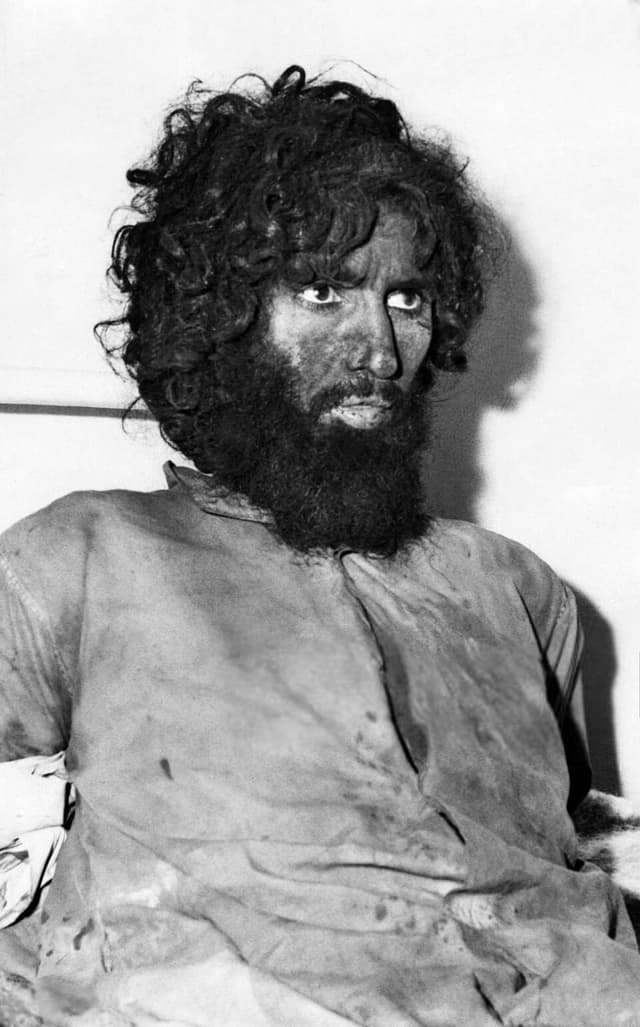
وكالات الانباء السعودية (واس) - spa, Public domain, via Wikimedia Commons
72/100
ACE Score: 72/100
High on the scale. An index, not a percentage.
70High
How total and coercive the leader’s power was.
87High
How devoted to and dependent on the leader followers became.
60Medium
How hard it was to leave.
(rule-based):Pattern: a closed system with little institutional restraint, where harm was aimed mainly at outsiders. A label for these scores, not a forecast. The summary and caveats describe what actually happened.
Scores are an interpretation of published sources using the ACE scoring guide, not findings of fact. Inclusion does not classify anyone as a cult. Disclaimer
Juhayman al-Otaybi was a former Saudi National Guard soldier who led a breakaway circle from a Salafi revivalist group in Medina. He condemned the Saudi royal family and the official clergy as corrupt. On 20 November 1979, the first day of the Islamic year 1400, he and several hundred armed followers seized the Grand Mosque in Mecca and proclaimed his brother-in-law Mohammed Abdullah al-Qahtani the Mahdi. Saudi forces, with foreign advice, retook the mosque after about two weeks of fighting, and official figures put the dead at 255. Juhayman and 62 followers were publicly beheaded in eight cities on 9 January 1980.
In academic terms, juhayman's movement shows peak temporal closure: an immediate end announced through a proclaimed Mahdi, which turned a pietist circle into an armed siege. Its very short life and dependence on one prophecy left almost no routinization.
Where scholars disagree
The case that the framework fits
Trofimov describes a leader who turned a pious circle into an armed sect organised around a messianic claim and an immediate end, the core features of a millenarian movement.
The case that it does not fit, or overstates
Hegghammer and Lacroix argue that Juhayman's group grew from a broad, mainstream Salafi revival and that its rejection of the state reflected wider currents in Saudi religious life. On this view the siege was a political-religious revolt, not the product of one leader's personal control.
The five walls
7.2 of 10
- 7
1.
Who decides what is real?
Juhayman's letters rejected the state clergy and taught that only his circle followed true Islam. Inside the mosque, followers were told the Mahdi could not be killed, and they held to this until al-Qahtani died.
- 5
2.
Are friends and family outside the group cut off?
The circle drew on tribal and student networks and brought wives and children into the mosque. Members withdrew from state jobs and official religious life.
- 7
3.
How hard is it to physically leave?
During the siege the gates were locked, snipers held the minarets and some worshippers were kept inside as hostages. Before 1979 the circle lived openly, which this peak score does not reflect.
- 10
4.
Is an apocalypse or a destined triumph always near?
The seizure was timed to the start of the Islamic year 1400, and followers swore allegiance to al-Qahtani as the Mahdi who would bring the end of days. Everything was staked on this immediate fulfilment.
- 7
5.
Does the group decide who deserves to live?
The rebels shot mosque guards at the outset and fought Saudi troops for two weeks. Official figures counted 127 soldiers killed and 255 total dead, with diplomats suggesting higher numbers.
Debt, dependence and harm
8 of 10, high
How much do followers feel they owe?
Followers left jobs and studies, brought families into the siege and pledged their lives to the Mahdi. Taking part in armed action at Islam's holiest site made return impossible.
8 of 10, high
How far does everything rest on one person?
The Medina circle had some organisation and funds, but authority rested on Juhayman and the Mahdi claim. The movement ended with the siege and executions.
+5, mostly outsiders
When the system turns violent, where does the harm go?
The rebels shot guards at the outset and killed 127 Saudi soldiers by official count, and worshippers held inside died in the crossfire. The 117 militants killed in the retaking and the 63 later beheaded died at the hands of the state, which the rubric does not count as violence by the movement.
Methods of control
Specific techniques from the historical record that kept followers loyal and the bubble sealed.
- 01Proclamation of a living Mahdi
- 02Timing action to a sacred calendar date
- 03Rejection of official clergy as corrupt
- 04Recruitment through tribal and student networks
- 05Families brought into the armed action
- 06Oath of allegiance to the Mahdi
Against the reference cases
State power, violence aimed outward
Compared with Hitler
Juhayman shared a vision of final struggle against corrupt rulers, but he led a few hundred men for two weeks, not a state.
A sealed group, violence aimed inward
Compared with Jones
Both led followers and their families into a sealed site in expectation of an end, but Juhayman's followers fought outsiders rather than dying by their own hand.
Through the theorists
Prophetic charisma at its most fragile: authority rested on a single claim that the Mahdi had come, and it collapsed when he died.
Wallace
A revitalization movement seeking to restore purity against a corrupted religious establishment.
Hegghammer and Lacroix
They read the movement as 'rejectionist' Islamism, focused on purity and withdrawal rather than state capture, which pushed it toward apocalyptic action.
Key sources
Moderate evidence base
- Trofimov, Yaroslav (2007). The Siege of Mecca: The Forgotten Uprising in Islam's Holiest Shrine and the Birth of al-Qaeda.
- Hegghammer, Thomas, and Stéphane Lacroix (2007). Rejectionist Islamism in Saudi Arabia: The Story of Juhayman al-'Utaybi Revisited.
Caveats
The vector excludes militants killed when Saudi forces retook the mosque and those executed afterwards, because that violence came from the state; some hostage deaths may also have come from the assault. Saudi authorities restricted information during and after the siege, so casualty and hostage figures are uncertain. Accounts of foreign involvement in the recapture differ. The scores describe the siege itself; the earlier circle was far less closed.
Cite this profile
Koziol, T. (2026). Juhayman al-Otaybi. In ACE: Authority, Cult & Exit (Version 1.1, pilot database). Ceraluna Labs. https://cultornot.com/leader/juhayman-al-otaybi