From the ACE database. Researched and checked against published sources.
Lyndon LaRouche
1922 to 2019, founded the National Caucus of Labor Committees around 1968, later the U.S. Labor Party and the Schiller Institute
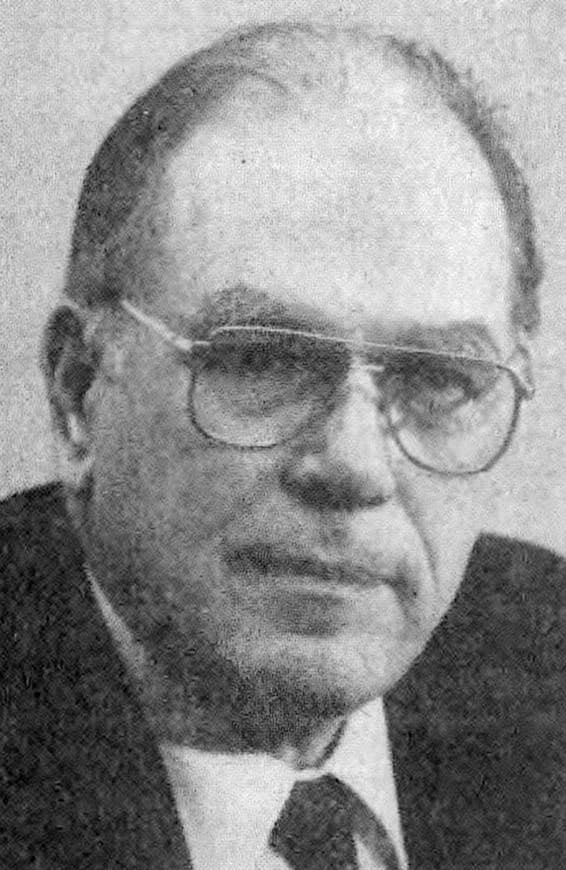
Oregon Secretary of State, distributed to voters without a copyright…, Public domain, via Wikimedia Commons
59/100
ACE Score: 59/100
Medium on the scale. An index, not a percentage.
60Medium
How total and coercive the leader’s power was.
67Medium
How devoted to and dependent on the leader followers became.
50Medium
How hard it was to leave.
(rule-based):Pattern: a closed system with little institutional restraint, where harm was aimed mainly at its own people. A label for these scores, not a forecast. The summary and caveats describe what actually happened.
Scores are an interpretation of published sources using the ACE scoring guide, not findings of fact. Inclusion does not classify anyone as a cult. Disclaimer
Lyndon LaRouche, a former Trotskyist and management consultant, built the National Caucus of Labor Committees, which moved from the far left toward conspiracy politics. In 1973 his members carried out 'Operation Mop-Up', a series of attacks on rival leftists, and from 1973 the group staged 'ego-stripping' sessions and spread claims that a member had been brainwashed by intelligence agencies. Members raised money full time, sometimes taking out loans, and in December 1988 LaRouche was convicted of conspiracy to commit mail fraud, mail fraud and conspiring to defraud the IRS, and sentenced to 15 years. He was paroled in 1994 and led the movement with his wife Helga Zepp-LaRouche until his death in 2019.
In academic terms, laRouche's movement shows high epistemic and temporal closure built on conspiracy theory and repeated predictions of collapse, with heavy financial debt on members. Its physical violence was short-lived, so the vector stays near zero.
Where scholars disagree
The case that the framework fits
King and Tourish and Wohlforth document thought control, ego-stripping, member fundraising under pressure and a leader treated as a genius whose theories could not be challenged.
The case that it does not fit, or overstates
Supporters describe a policy think tank and political campaign network, and LaRouche argued that his prosecution was politically motivated. Members lived independently and could leave, and the movement was never a sealed community.
The five walls
5.8 of 10
- 7
1.
Who decides what is real?
LaRouche taught that the British oligarchy and intelligence services controlled world events and that outside media were their instruments. Members who doubted him were subjected to group criticism and accused of being agents.
- 6
2.
Are friends and family outside the group cut off?
Former members told reporters and Dennis King that the leadership steered where they lived and whom they dated. Families who objected were often described as hostile or manipulated.
- 4
3.
How hard is it to physically leave?
Members often shared group apartments and worked long hours, but they were not physically held. LaRouche's own Leesburg, Virginia estate was guarded, which protected him rather than confining members.
- 7
4.
Is an apocalypse or a destined triumph always near?
LaRouche repeatedly predicted imminent financial collapse, pandemics and a 'new dark age', for example declaring in 1999 that the collapse of the world financial system was inevitable. These forecasts justified constant fundraising and recruiting.
- 5
5.
Does the group decide who deserves to live?
Between April and September 1973 members carried out at least 60 reported assaults on members of rival left groups such as the Communist Party and Socialist Workers Party in 'Operation Mop-Up'. Later, critics and journalists were denounced in antisemitic and conspiratorial terms, though no killings were sanctioned.
Debt, dependence and harm
7 of 10, high
How much do followers feel they owe?
Members gave up careers and savings and some took loans for the organisation. His 1988 conviction involved more than $30 million in loans from supporters that were never repaid.
6 of 10, medium
How far does everything rest on one person?
The movement ran publications, front groups and the Schiller Institute with paid officials. All doctrine came from LaRouche, though Helga Zepp-LaRouche kept the network going after 2019.
+1, little harm, or balanced
When the system turns violent, where does the harm go?
Physical harm was concentrated in the 1973 attacks on outsiders and was not lethal. Most later harm was financial and psychological, falling on members and lenders.
Methods of control
Specific techniques from the historical record that kept followers loyal and the bubble sealed.
- 01Conspiracy worldview that recasts critics as agents
- 02Group 'ego-stripping' and criticism sessions
- 03Constant street and phone fundraising quotas
- 04Loans solicited from members and supporters
- 05Repeated forecasts of imminent collapse
- 06Front groups that hid the movement's identity
Against the reference cases
State power, violence aimed outward
Compared with Hitler
LaRouche borrowed conspiracy themes that overlapped with older antisemitic tropes, but he never commanded a mass party or state violence.
A sealed group, violence aimed inward
Compared with Jones
Like Jones, he combined apocalyptic forecasts with financial extraction, but his members were not isolated in a compound and no deaths resulted.
Through the theorists
Pure charismatic authority around a self-declared theoretical genius, with an organisation that had no authority apart from him.
Tourish and Wohlforth
They treat the LaRouche movement as a political cult whose ideology served to justify the leader's control over members' time and money.
Failed predictions of collapse were reinterpreted rather than abandoned, which deepened commitment instead of weakening it.
Key sources
Moderate evidence base
- King, Dennis (1989). Lyndon LaRouche and the New American Fascism.
- Tourish, Dennis, and Tim Wohlforth (2000). On the Edge: Political Cults Right and Left.
Caveats
Much evidence comes from critics, ex-members and prosecutors, and LaRouche contested the fraud case. Violence peaked in 1973 and was not repeated on that scale. Control varied across countries and decades.
Cite this profile
Koziol, T. (2026). Lyndon LaRouche. In ACE: Authority, Cult & Exit (Version 1.1, pilot database). Ceraluna Labs. https://cultornot.com/leader/lyndon-larouche